Capsula, screen by screen
Today, for everyone
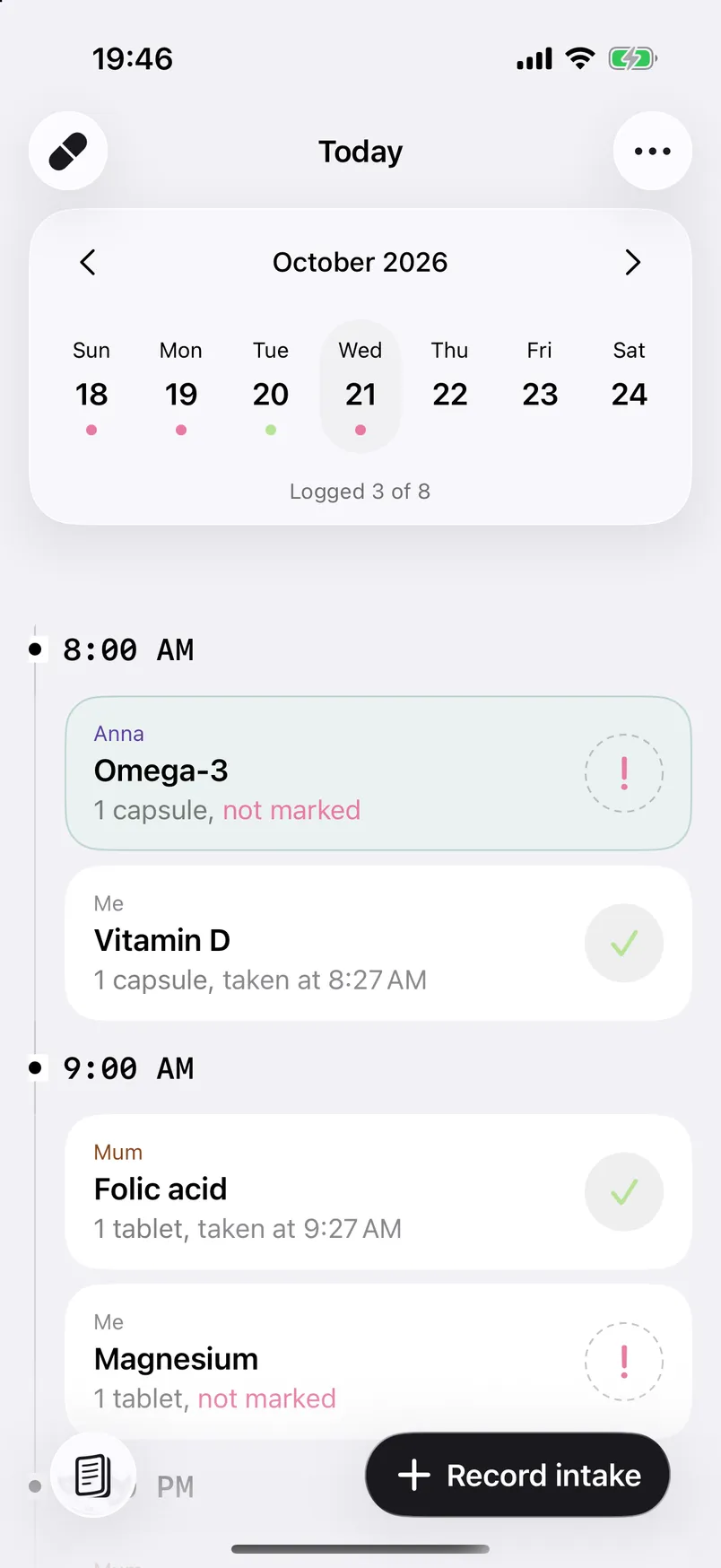
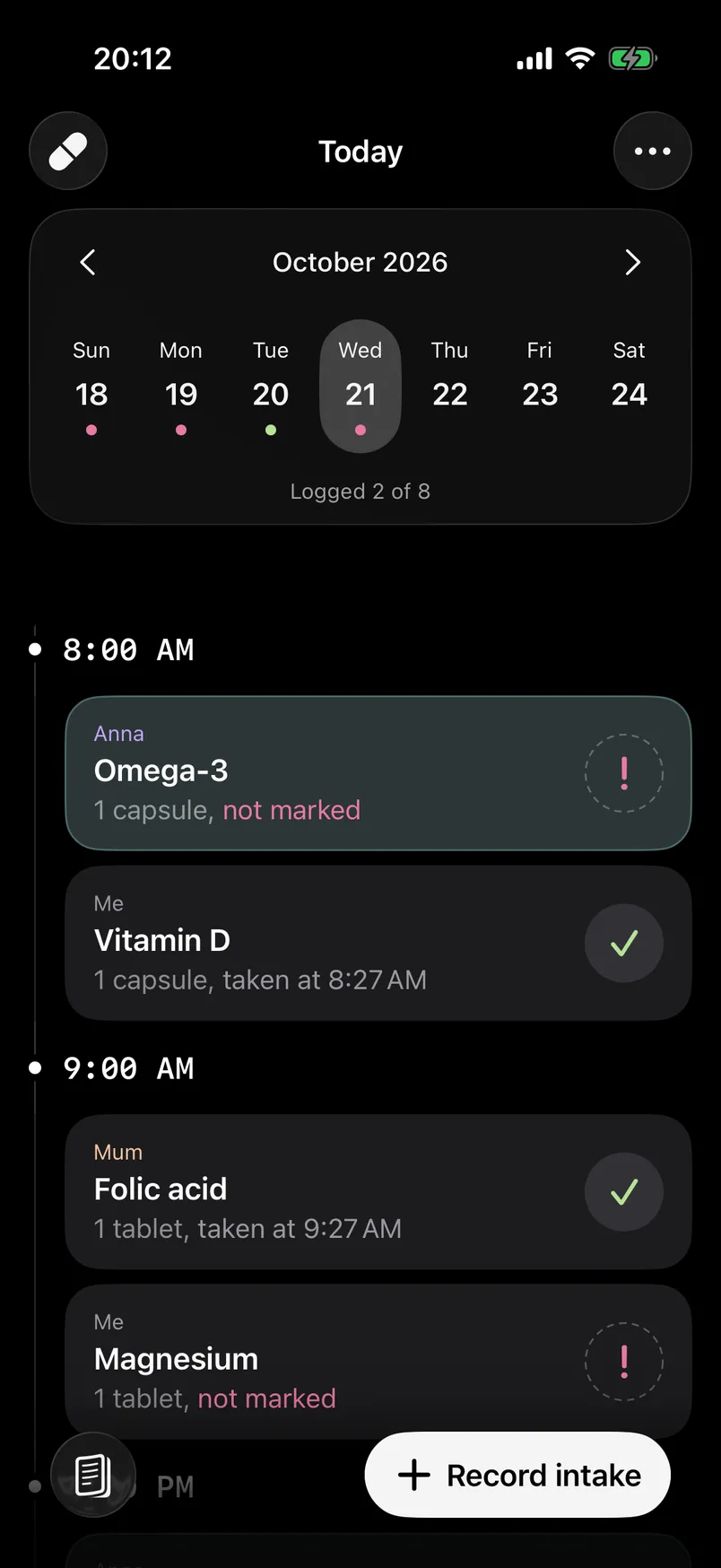
Every dose of the day in order, whose it is, and a mark when it’s taken. The week above says how each day went.
Why doses get missed
62% of people with a long-term condition name forgetting as the reason they miss a dose.
Reminders with Taken and In 10 min, and widgets on the Home Screen and the Lock Screen.
Gadkari and McHorney, BMC Health Services Research, 201237% name running out as a reason for a missed dose.
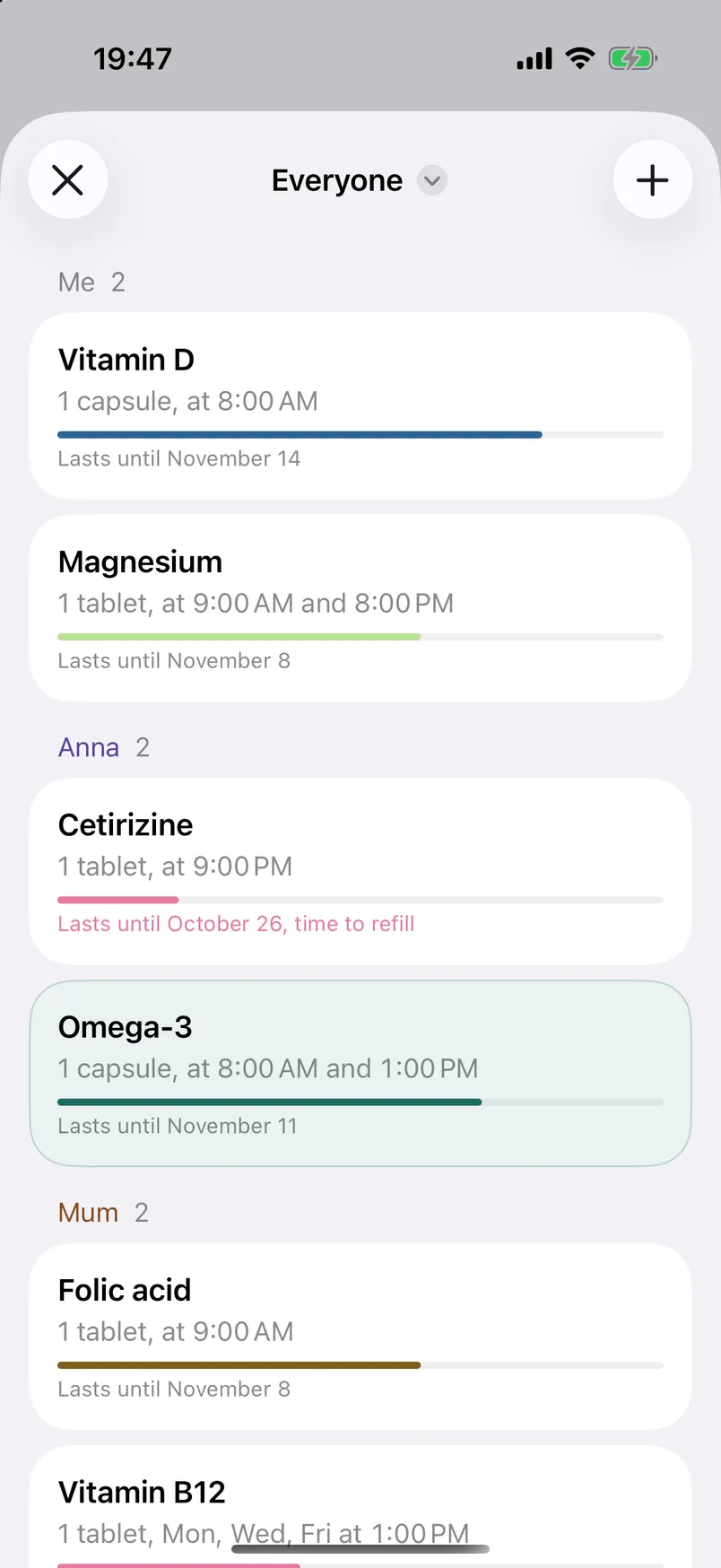
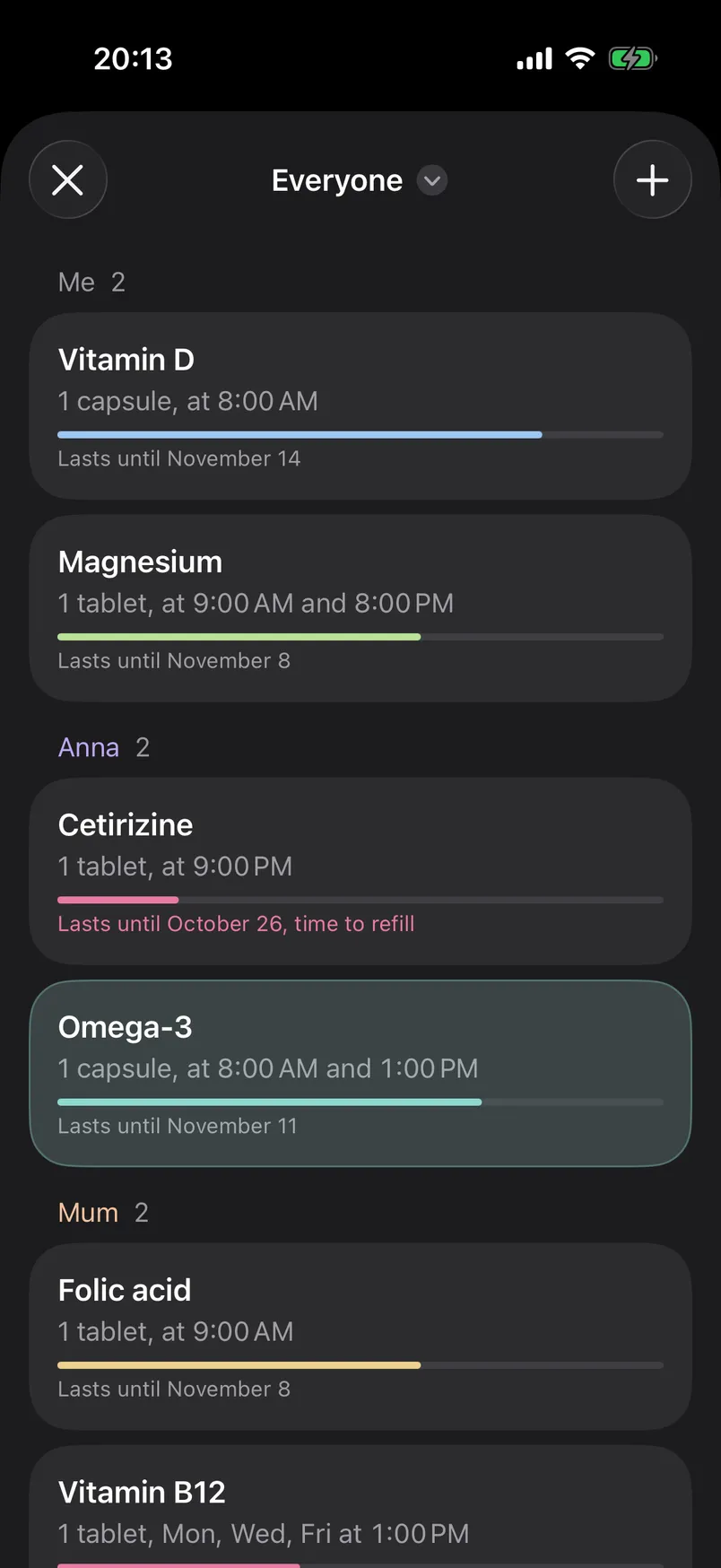
Every dose comes off the stock. Capsula shows the day it runs out and reminds you to refill in time.
Gadkari and McHorney, BMC Health Services Research, 201227% of medicine errors in children under six happen when a dose is given twice, often by two parents.
A marked dose is plain to see on Today. Marking it again asks whether another dose is really needed.
Smith and others, Pediatrics, 2014Half of paracetamol overdoses are accidental, often from two medicines that both contain it.
An as-needed medicine has an interval and a limit for 24 hours, entered from the leaflet or your doctor. Capsula asks before an early dose.
Larson and others, Hepatology, 200558% of people with Parkinson’s in hospital got a medicine late at least once.
A reminder can repeat until you answer it, or ring as an alarm even in Silent mode and Focus.
Parkinson’s UK, 202343% of missed doses come in runs of three days or more.
After a few days without a mark Capsula asks whether everything is all right. When you travel, each medicine follows the local or the home clock.
Vrijens and others, BMJ, 200867% of medicine lists taken on admission to hospital had at least one error.
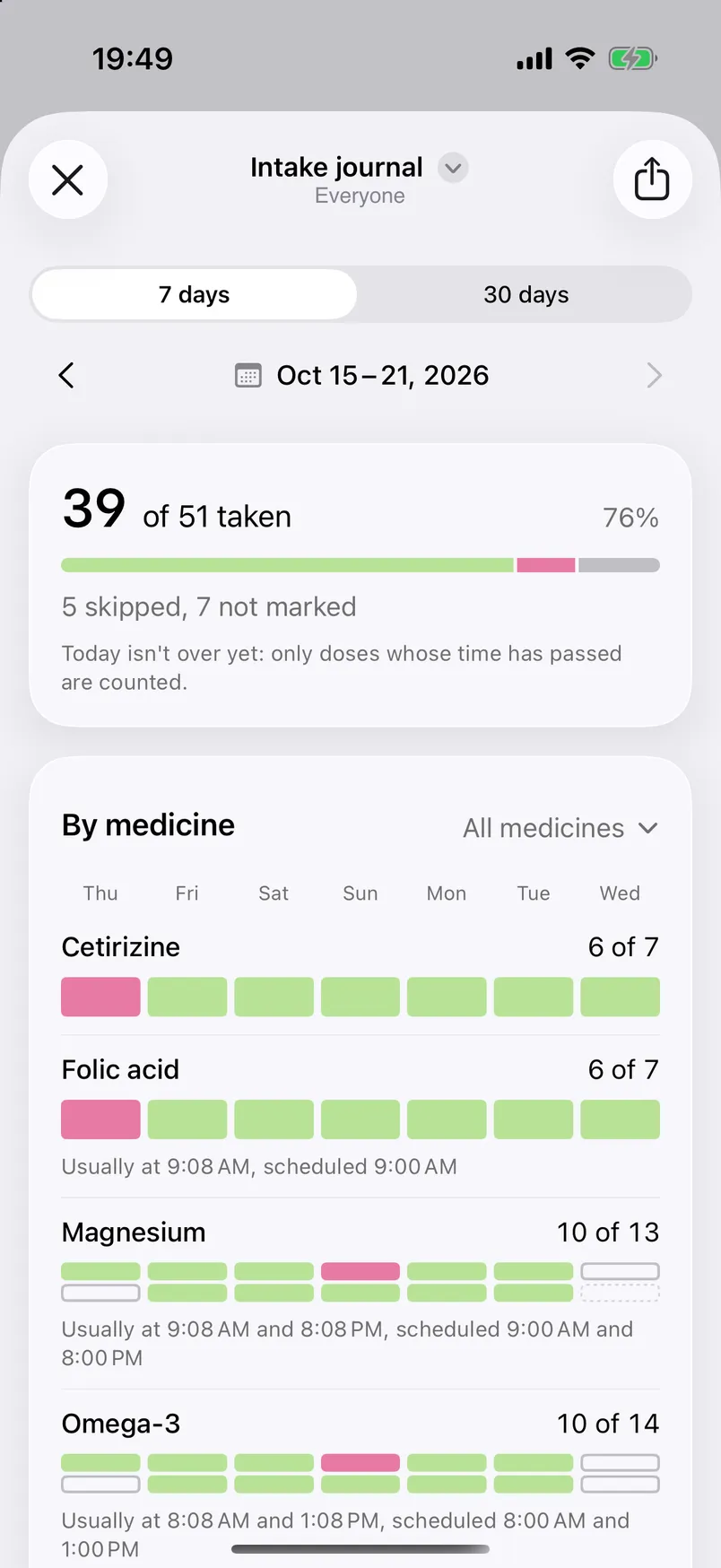
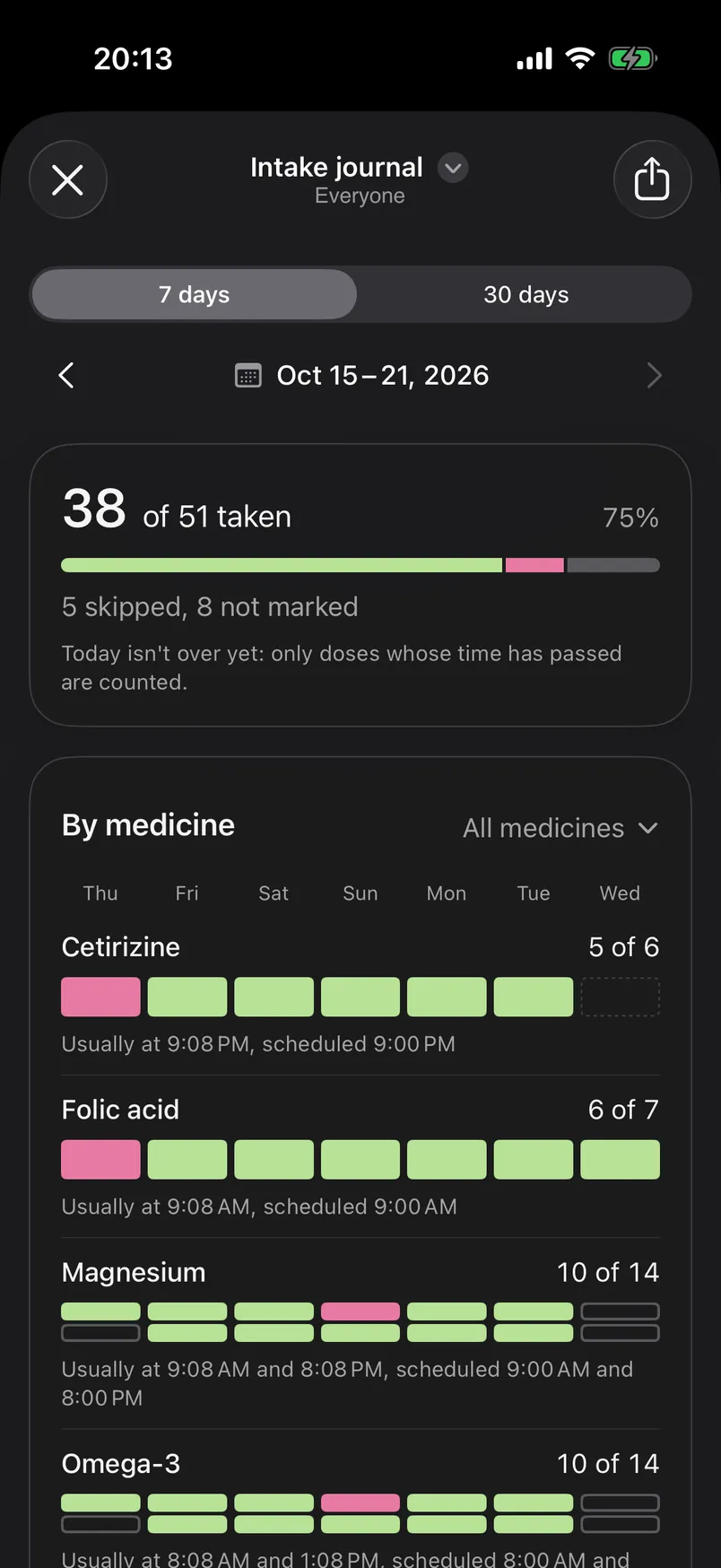
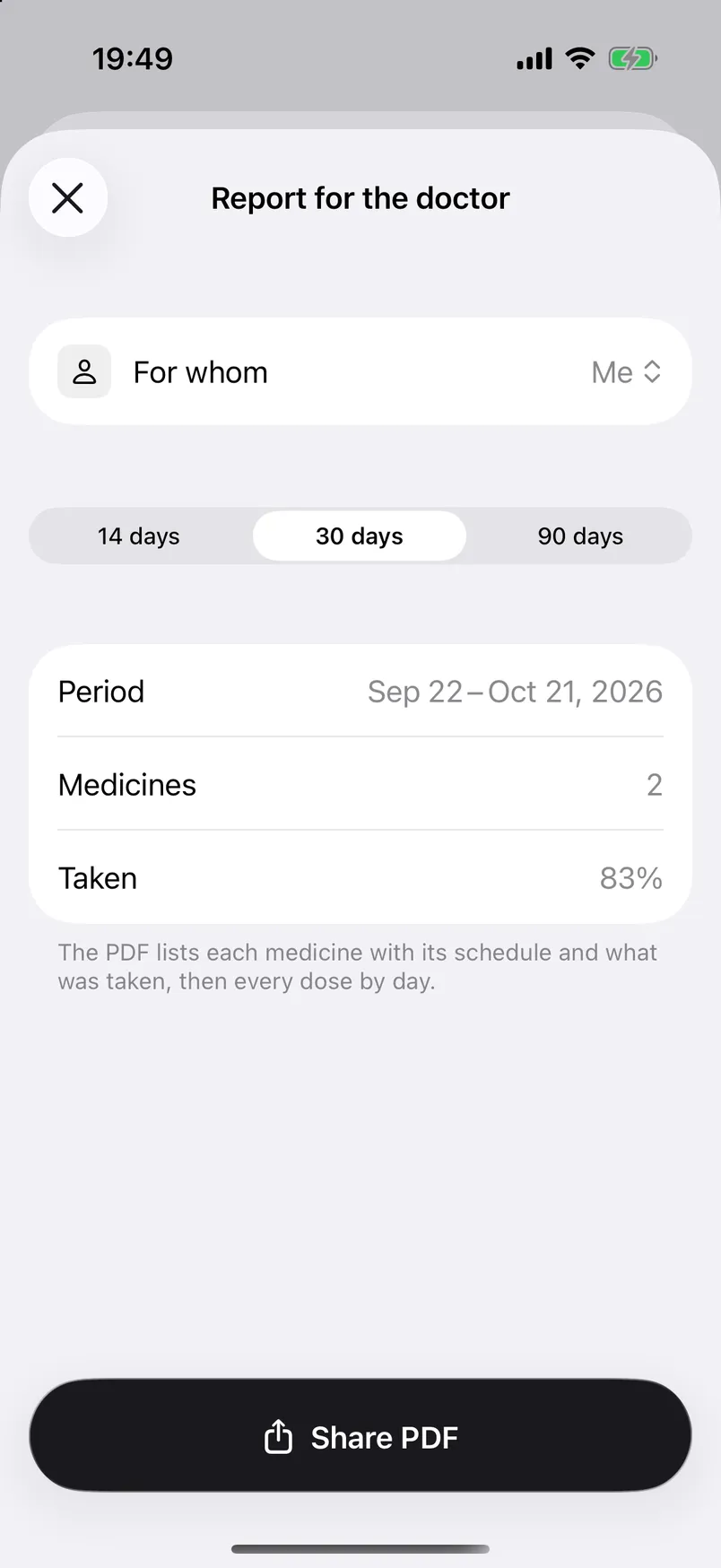
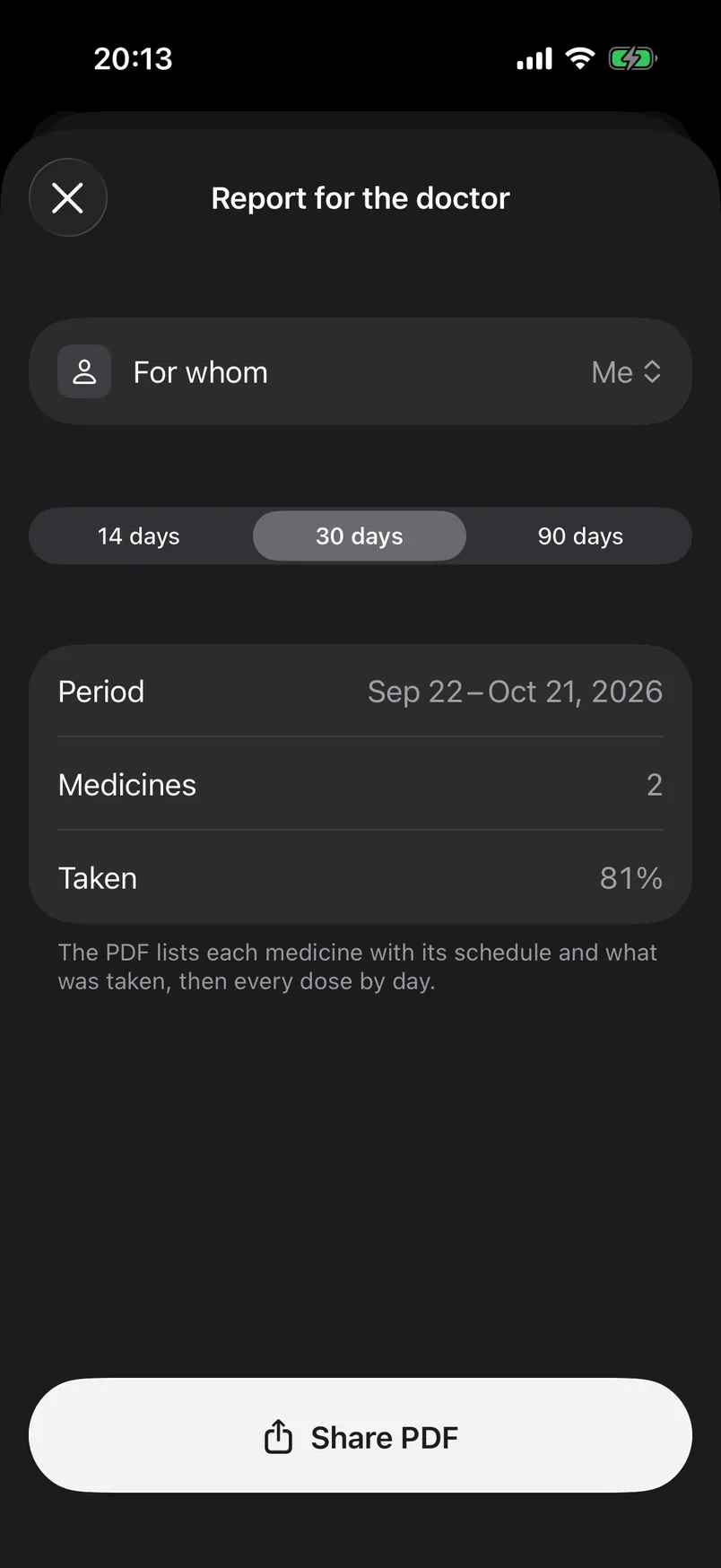
A PDF report with the dose journal, and an emergency card with allergies, blood type and current medicines.
Tam and others, CMAJ, 200545% stop a course of antibiotics before it ends.
A course shows which day it is and how many are left, and asks why before it ends early.
Study published in 2023, PubMed Central2× Worries about a medicine halve the chance of taking it as prescribed.
A skip can carry its reason, and a dose a note on how you felt. Both go into the doctor’s report.
Horne and others, PLoS One, 20132–3× Tying a dose to a routine works two to three times better than a reminder alone.
A time can be tied to a routine: after breakfast, before bed, or a habit of your own.
Conn and Ruppar, 201784% of parents made at least one dosing error, and spoons doubled the errors.
Liquid doses are set in millilitres, never in spoons.
Yin and others, Pediatrics, 201479% of the health apps studied passed data on to third parties.
No account and no server of ours. Your data stays on your iPhone and in your own iCloud.
Grundy and others, BMJ, 2019
The week, kept
Every day keeps what was taken, skipped or missed. A dot under the day says how it went.
Today so far: 6 of 8 taken
- 8:00 AMVitamin DMeTaken
- 8:00 AMOmega-3AnnaTaken
- 9:00 AMMagnesiumMeTaken
- 9:00 AMFolic acidMumTaken
- 1:00 PMVitamin B12MumTaken
- 1:00 PMOmega-3AnnaTaken
- 8:00 PMMagnesiumMeDue
- 9:00 PMCetirizineAnnaDue
The whole family
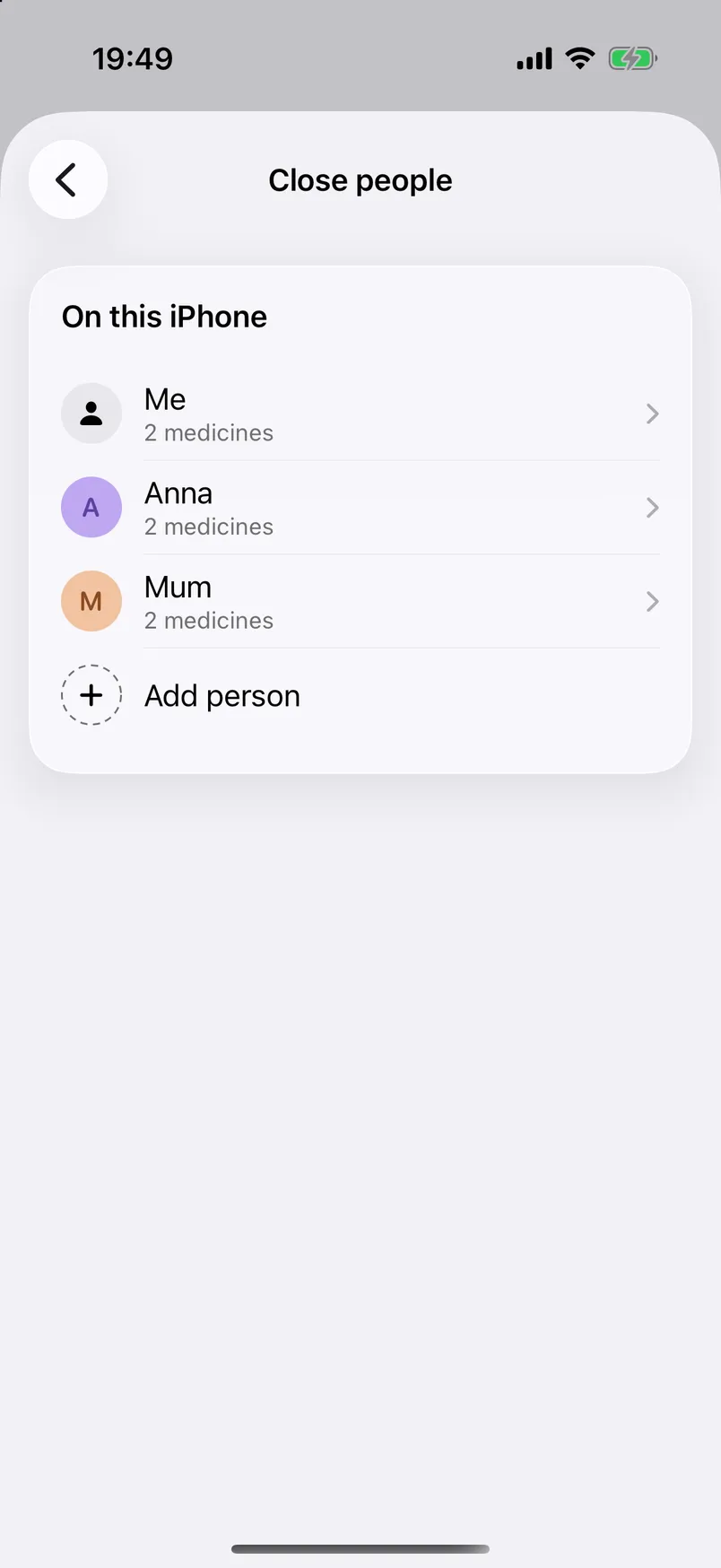
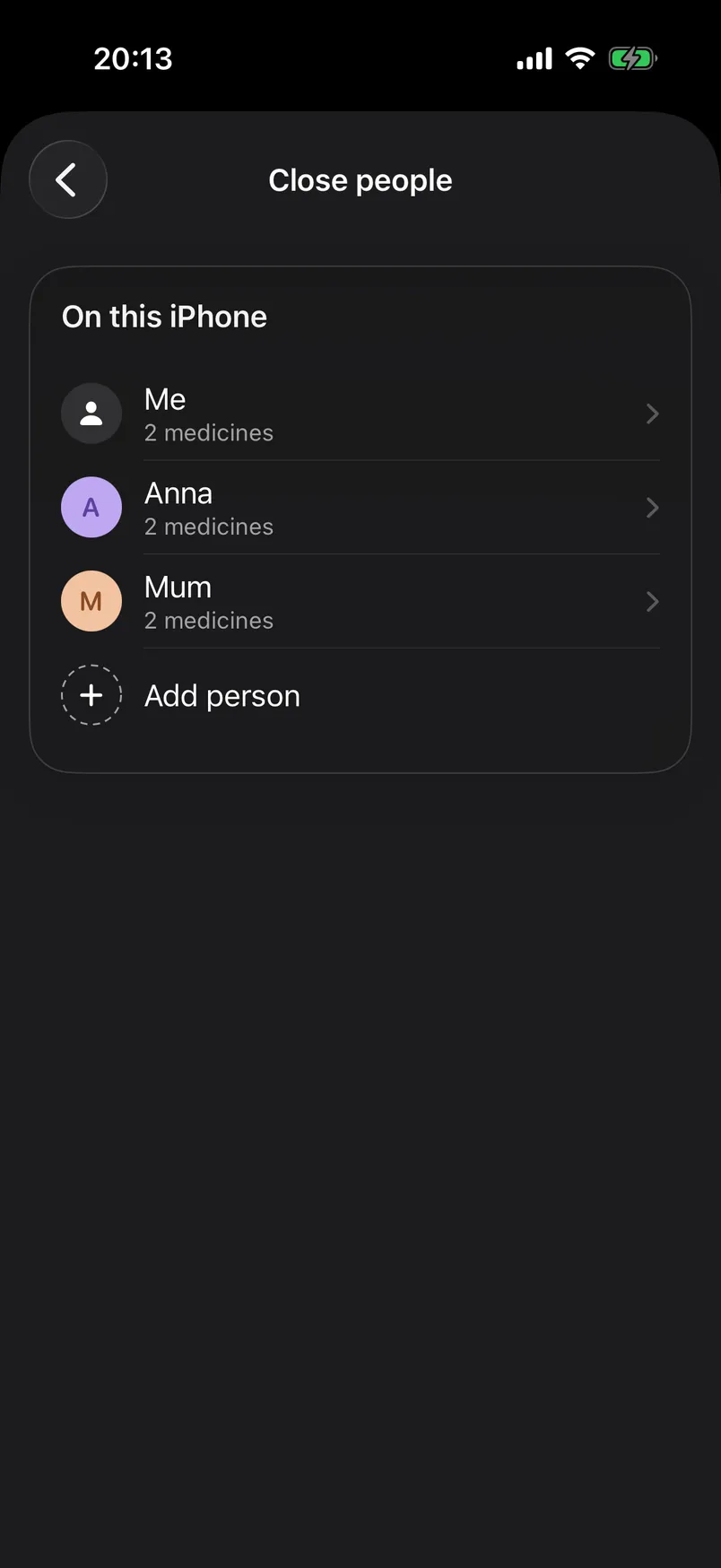
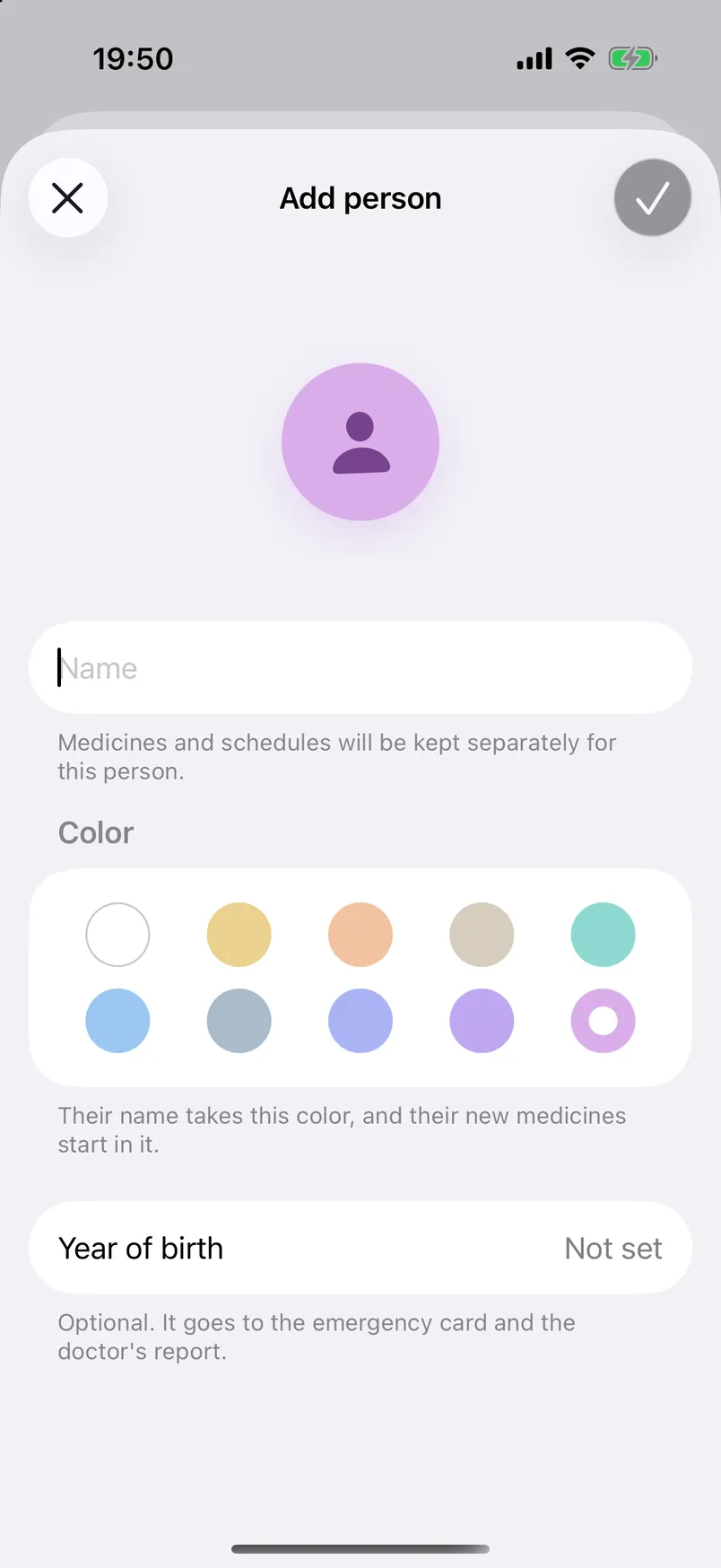
Parents, children and anyone you look after, on your iPhone: their own medicines, schedules and journal.
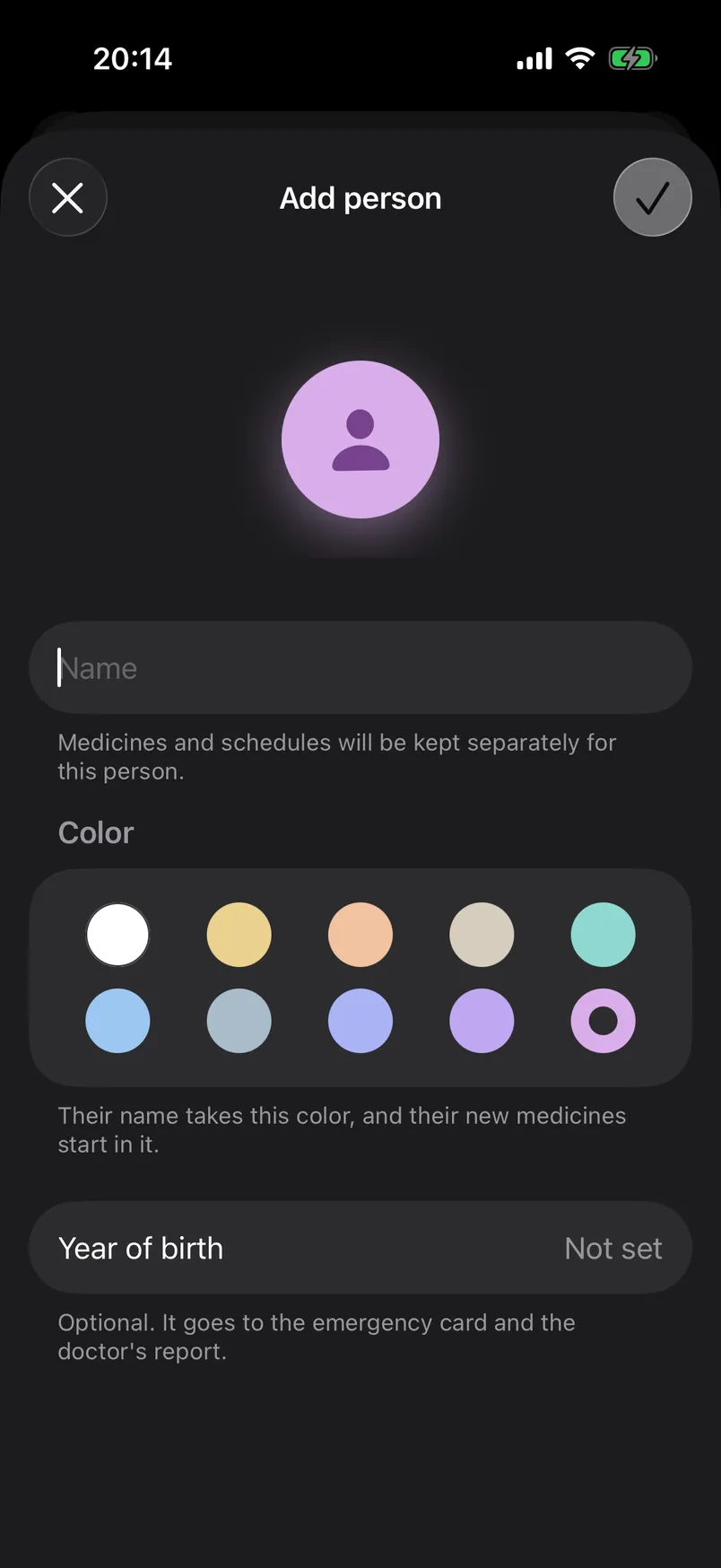
Each close person gets a colour. It marks their name everywhere and starts their new medicines, and each of them can have a widget of their own on your Home Screen.
Also in Capsula
As needed
Limits from the leaflet or your doctor: how often and how many in 24 hours. Capsula asks before an early dose.
When travelling
In a new time zone, each medicine follows the local clock or keeps the home one.
Courses and weekdays
Every day, chosen weekdays or a course with an end date. Times tied to a habit, like after breakfast.
Felt in the hand
A taken dose answers with a light tap; a leaflet limit or a second dose warns you. A switch in Settings turns it off.
Emergency card
Allergies, diagnoses, blood type and what each person takes, ready to show a doctor at once.
Your data to take
Export the journal as a spreadsheet, or everything as JSON, whenever you want it.
Your health stays yours
Medicines say a lot about a person. Capsula keeps them on your iPhone, and the developer never sees them.
Read the privacy policyNo account
Nothing to sign up for. Open the app and add a medicine.
No server
Capsula has none of its own. Your medicines never pass through one.
No ads, no tracking
Your dose history is never used for advertising or analytics.
Your own iCloud
On by default, so a new iPhone gets the whole journal back. Only you can read it.
Pricing
Your own data is never locked behind Pro. Prices are in US dollars; other App Store countries follow Apple’s price tiers.
$14.99 a year
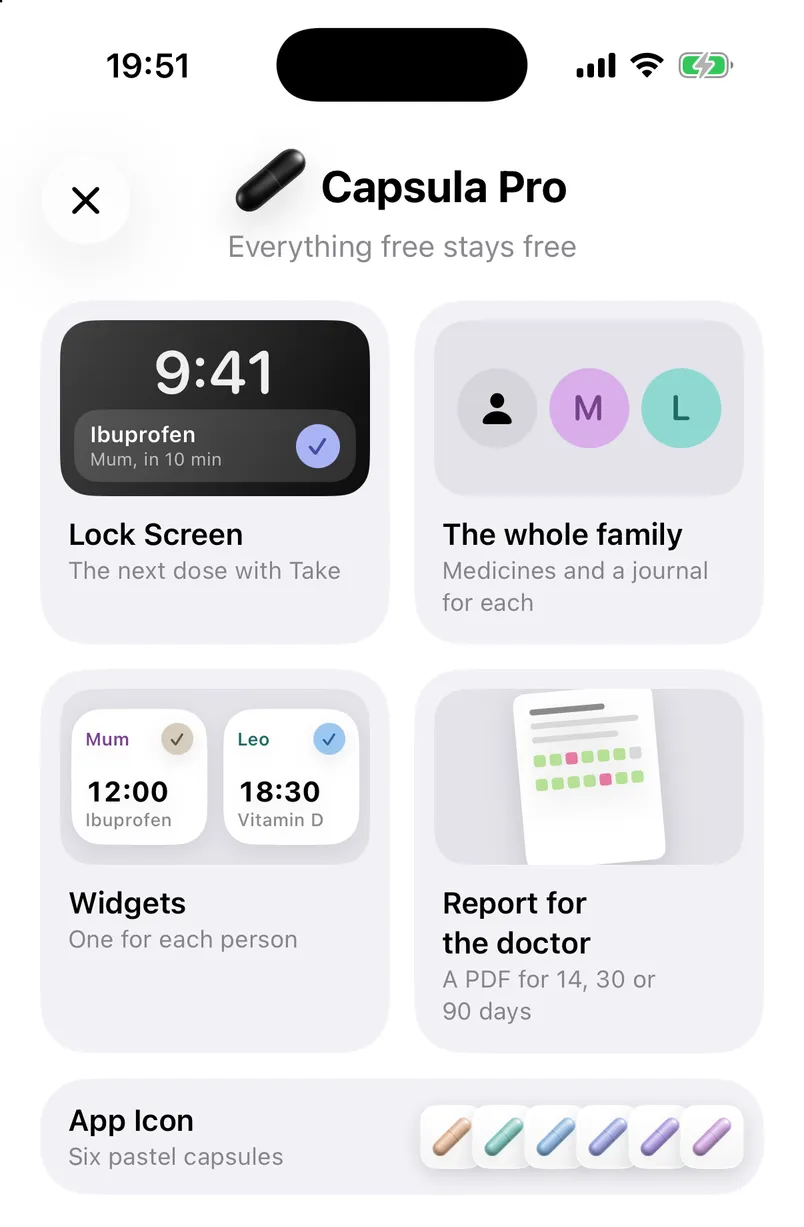
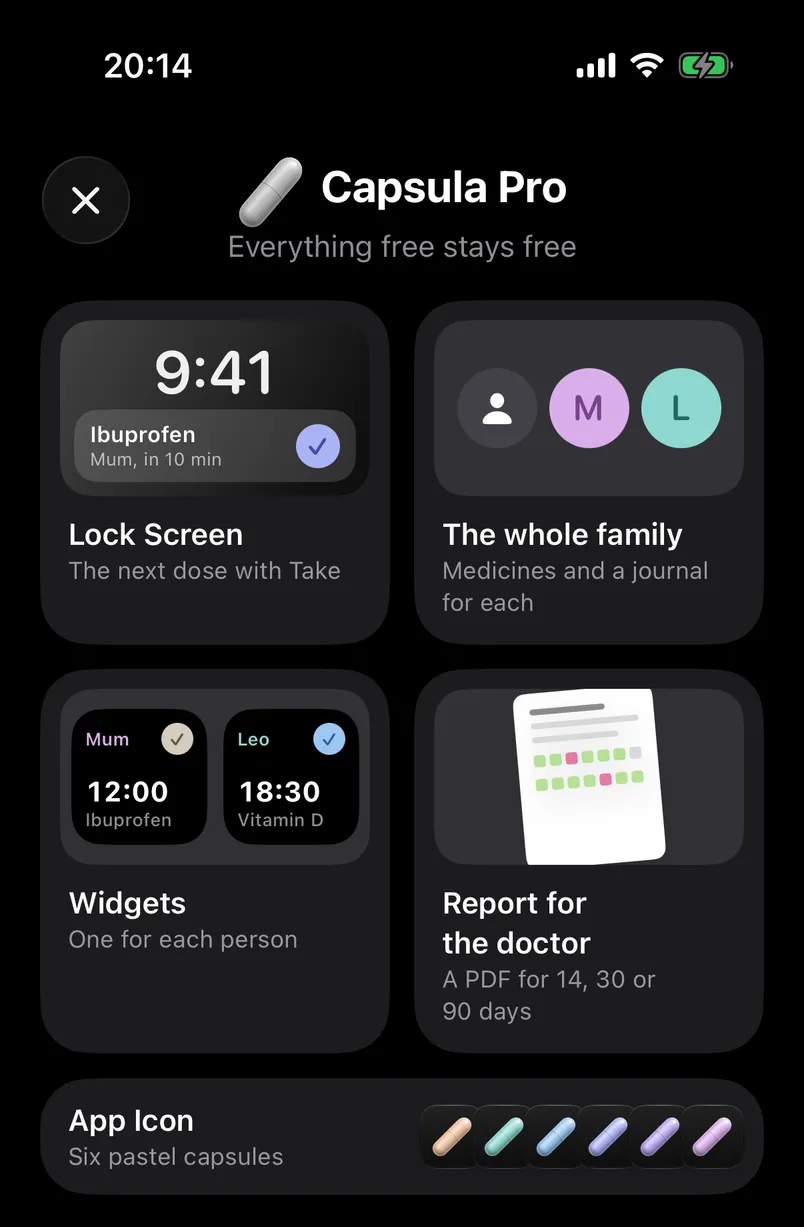
The first week is free. Everything in Free, plus medicines for the whole family, doses on the Lock Screen, a widget for each person, the doctor’s report as a PDF and six pastel app icons.
Questions
Does Capsula tell me how much to take?
No. Capsula never works out a dose and gives no medical advice. Schedules, intervals and limits come from the leaflet or from your doctor.
Can I see Mum’s doses on my iPhone while she’s far away?
Not yet. Today the whole family is kept on one iPhone. Reminders on another person’s phone need a larger piece of work, and it’s on the list.
Does it work without the internet?
Yes. Reminders, marks, stock and the journal live on your iPhone. iCloud only keeps your other devices up to date.
What happens to my journal on a new iPhone?
iCloud is on by default, so a new install finds your journal and brings it back by itself. It is your private iCloud; nobody else can read it.
What about cycles like 21 days on and 7 off?
Weekdays, every few days and courses with an end date are there. Cycles and slowly lowering a dose are next.
What if Pro ends?
Your medicines, marks and journal stay and keep working. Pro adds the family, the Lock Screen, widgets for each person and the PDF report.
Is there Capsula for Android?
No. Capsula is made for iPhone with iOS 26 or later.